Protect what cannot be replaced

An agency within the U.S. Department of the Interior is busily studying ocean bottoms. No one disputes the value of learning what’s on the floor of the world’s great bodies of water, but the taxpayer-funded findings may advance the disruption of ocean balance by providing information to industries eager to mine 40 million-year-old precious minerals that found their way there over 40 million years. The agency involved is the United States Geological Survey (USGS), which Congress created in 1879 to advance scientific and technological methods of mapping geology and learning about minerals.
USGS, part of the U.S. Department of the Interior, has been investigating marine mineral potential, according to its website, focusing mainly in the American Exclusive Economic Zone (EEZ), which extends 200 miles from shore.
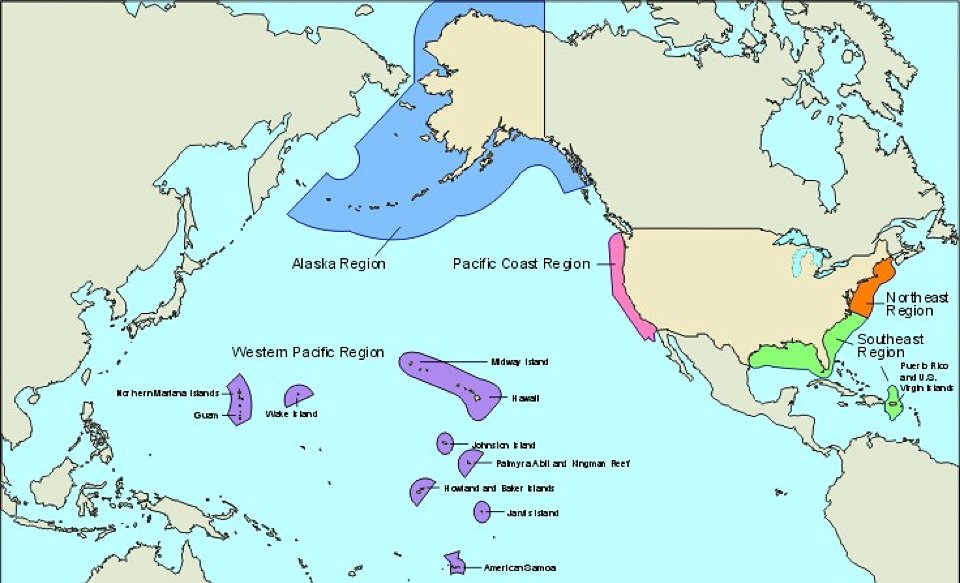
USGS’ current priorities follow the direction set by President Donald Trump, who has consistently and increasingly favored interests of business over protecting the environment. Interior is carrying out Trump’s executive order called A Federal Strategy to Ensure Secure and Reliable Supplies of Critical Minerals, which seeks to reduce dependence on foreign sources. The U.S. EEZ contains much of the sought-after minerals. The EEZ is larger than the country’s land mass. It consists of more than 3.4 million square nautical miles, mainly surrounding Alaska and Pacific and Caribbean islands.
As USGS explains, “(c)ountries around the world need metals and minerals to satisfy burgeoning demands for technology and electronics.” USGS advances the argument that the materials found on ocean floors can help the environment. “Even green technologies, such as wind turbines and electric cars, require large quantities of rare and expensive metals,” they explain. USGS research has found, for instance, that scandium, if brought from the bottom of the ocean to the sky, could save aircraft fuel because it is lighter than titanium and would make aircraft more fuel-efficient.
The irony of needing to tear the ocean floor for ecological reasons was summed up in the subtitle of a USGS paper issued September 2019: A viable approach to meeting the critical needs of the U.S. for secure, responsibly sourced metals for a green energy future.
USGS makes no bones about their its desire to help industry, saying “(r)eliable information about deep ocean minerals helps stakeholders make informed decisions on resource use, energy production, and environmental impacts. USGS provides expertise in describing and analyzing these mineral deposits including environmental issues related to seafloor mining.”
But USGS also wants to make sure that such mining can be done ecologically and has been actively looking at how it could affect ocean floor and water.
USGS has heard from industry. Last August, an official USGS seminar was conducted by Ocean Minerals LLC (OML), a Stafford, Texas-based corporation dedicated to ocean mining. OML suggested the seminar to make sure USGS heard from industry, explains company President Hans Smit. In 2016, OML signed an agreement with the government of the Cook Islands for rights to explore and prospect for minerals in its EEZ.
The Cook Islands, an independent Pacific archipelago, consists of 15 islands with an EEZ of 1,960,027 square kilometers (756,771 sq. miles), about the size of Mexico.
OML explained at the seminar that Pacific seabed nodules and crusts contain four or five times the amount of known nickel and cobalt on land. They added “(s)eabed resources are available in favorable, non-corrupt jurisdictions.”
The company emphasizes on their its website that their “mission is to responsibly transform deep ocean natural resources into prosperity in a responsible and sustainable manner by applying a precautionary approach and by employing world-class technology and expertise.” Its five-member board of directors and eight-member advisory board, however, consist only of industry members. It couldn’t find environmentalists who would serve, Smit explains.
Smit says the public doesn’t understand how seabed mining can become much safer than land mining – you tear up a much smaller area and find minerals in much higher concentrations. On land “you have to remove large amounts of rock and you end up with large fissures and holes in the environment if you are doing hard rock mining. The holes fill up with water and expose noxious material into it,” he said in an interview. “And if you look for the bounty in soil with low concentrations, you have to tear up a lot of land.”
Trophies OML and others want to scoop up from the Pacific floor include manganese nodules, rocks sized between golf balls and baseballs. These rocks include metals such as manganese, iron, nickel, copper and cobalt. The big environmental problem with bringing them to the surface consists of the plumes harvesting equipment causes, both on the way up to the surface and back down. “When the sediment particles settle down to the ocean floor, organisms, particularly immobile ones, could be covered and killed,” USGS states.

USGS, along with the Scripps Institution of Oceanography at the University of California San Diego, is still studying how plumes might affect plankton, floating organisms that form the base of the Pacific food web. Effects on the sea organisms m could disrupt the entire food chain. USGS Research Oceanographer Amy Gartman is also exploring the effects of crushing seafloor massive sulfide deposits that form when mining crushes them and pumps the particles to the surface. The crushing will release a different type of particle than is normally found in the ocean. Gartman’s research has found that minerals such as bismuth-telluride and gold in the particles could contaminate ocean waters and could spread for miles if carried by currents. (As a scientific side benefit, Gartman’s research could tell us how the ocean floor formed millions of years ago.)
Gartman’s latest paper, published June 1, “suggest(s) that our understanding of element transport in hydrothermal plumes is incomplete,” and consequences could last decades as iron and manganese that escape and could travel a long distance in the water.
In its budget request to Congress for Fiscal Year 21, USGS said it “will conduct exploration and analysis of seafloor massive-sulfide deposit in the US EEZ, a subject that has been the subject of industry interest in past years and responds to (Trump’s order). The program plans to explore the Southern Gorda Ridge of the Escanaba Trough, a Pacific valley off the coast of Northern California and Oregon filled with high grade gold, silver, copper, zinc and other minerals in demand; but also, home to large shellfish communities. “This effort will explore mineralogy and composition of enriched crusts and conduct multibeam mapping and measurements of environmental conditions” in the area, the budget request promises.
The policy of helping industry continues. A USGS report dated June 5 says, “(a) s part of the President’s 2018 Executive Order on critical minerals, marine mineral information is key to helping the federal government understand its potential mineral wealth; helping industry determine which regions and deposits might be worth exploring; and helping stakeholders understand the effects of mining on the marine environment.”
Gartman said in an email that USGS “performs science in the public interest,” and leaves it up to policy makers to use it. She wrote “we do not work on engineering so would not inform business how to mine the ocean floor, but businesses could use our scientific data to inform their work.”
Will the administration — and private explorers — get what they desire? The Democratic-led House Appropriations Committee approved an FY 21 spending bill for USGS that doesn’t mention seabed mining, though it provides instruction on many other initiatives. While it doesn’t specifically provide funding for the administration’s wishes, the bill doesn’t prohibit it either. So, it seems likely.