Protect what cannot be replaced
Regenerative agriculture in the Sierra Gorda, Mexico
A normal day for Lucio Baldelamar in the Sierra Gorda, Mexico, involves visiting local farmers in the reserve’s regenerative agriculture community.
Its representative for 11 years, he has helped teach people the “holistic, regenerative way” to grow crops and rotate livestock. “Originally, I was cynical,” Lucio says, “but then I realised it worked.”
Geronimo Nieto grows maize, beans, mangos, avocados and oranges on his plot of land. He incorporates shredded biowaste and goat droppings into the soil, harvesting twice a year. “Sowing and cropping our land, that’s what we live from here,” Geronimo says. “When we are able, we sell a little, and the rest is for the family here to eat.”
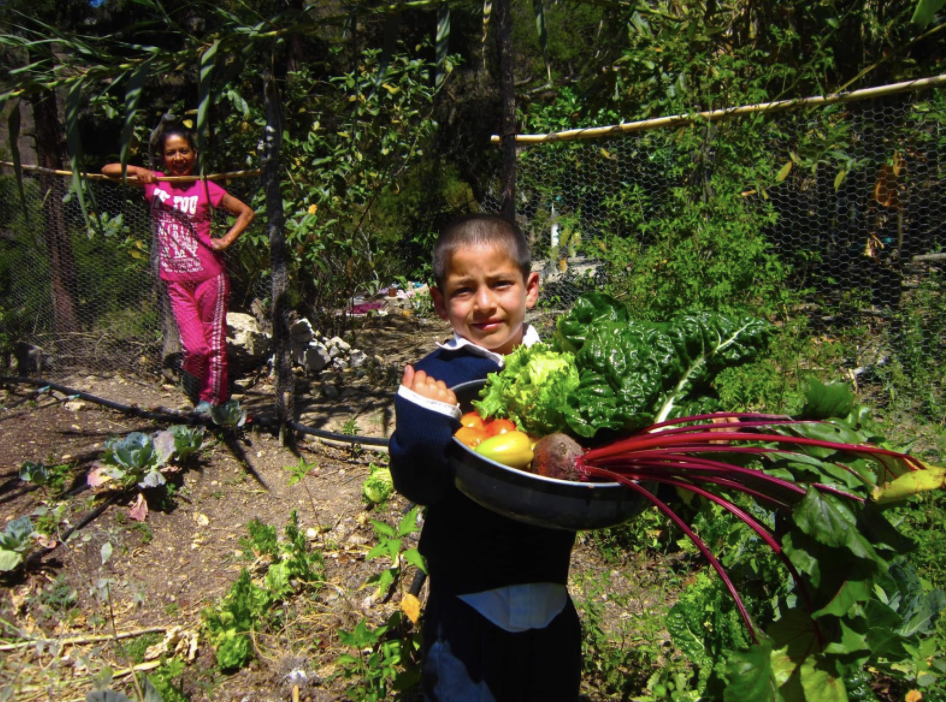
Home to species such as wild cats, black bears, spider monkeys and monarch butterflies, the Sierra Gorda is perhaps the most ecologically rich area in Mexico, and one of the most biodiverse places on Earth. Extending across 400,000 hectares and roughly the size of Rhode Island, the UNESCO-listed reserve in the state of Queretaro is abundant in tropical cloud forest and other threatened habitats.
In recent years, the reserve has been besieged by bark beetle epidemics, forest fires, droughts, illegal logging and land degradation from government projects. “We should be scared, because we are running out of time,” says Pati Ruíz-Corzo, the woman who spearheaded the campaign for regenerative agriculture in the Sierra Gorda. “So we must teach our children another way, towards a sparing, frugal and self-sufficient society.”
Much of the forested land in this corner of Mexico belongs to those on the lowest rung of the economic ladder. Thirty percent is owned by ejidos (local communities), the rest privately, with the government issuing regulations. Cattle-ranching is an industry growing in popularity among Mexican farmers, not just in the Sierra Gorda. Agrochemicals such as atrazine, which poses a significant threat to groundwater and is banned in many countries, are used widely.
Grupo Ecológico de la Sierra Gorda is a non-governmental community association that leans heavily on regenerative agriculture to maintain the reserve’s ecological balance. Practices include livestock removal, no tillage, diverse cover crops, in-farm fertility, no pesticides or synthetic fertilizers, and multiple crop rotations. According to Project Drawdown, regenerative annual cropping and managed grazing are some of the most effective ways to achieve global carbon emissions reductions.
“We have expanded the concept and moved to the highest part of the basin, protecting and increasing the forests’ infiltration capacity, regenerating them with biodiversity,” says Pati.
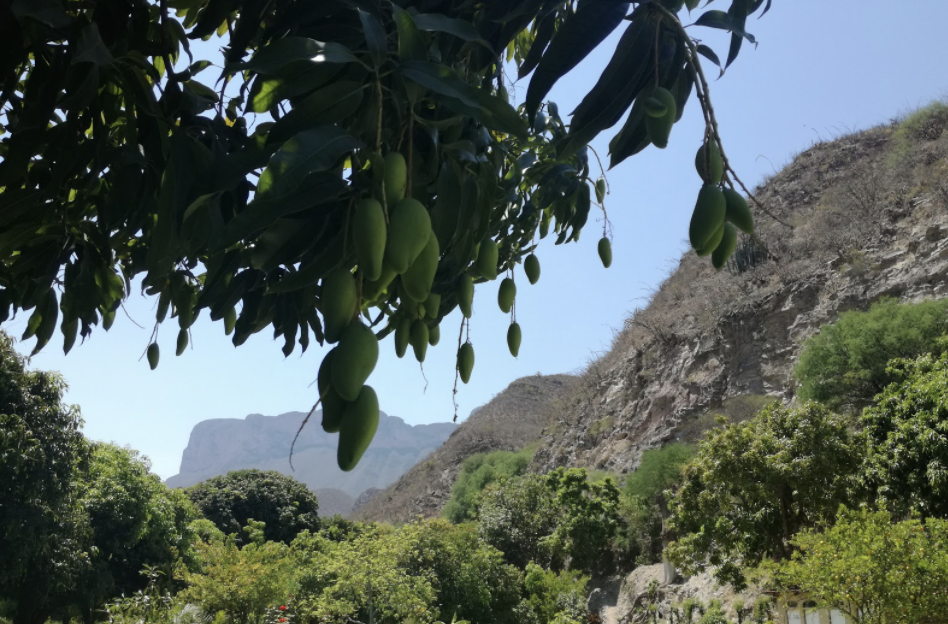
When asked how he avoids pests, Geronimo says, “when it’s really contaminated, to tell you the truth, I have to use something strong. But when it’s under control, I try to use the organic.” He added that organic pesticides generally work, allowing him to see a lot of change.
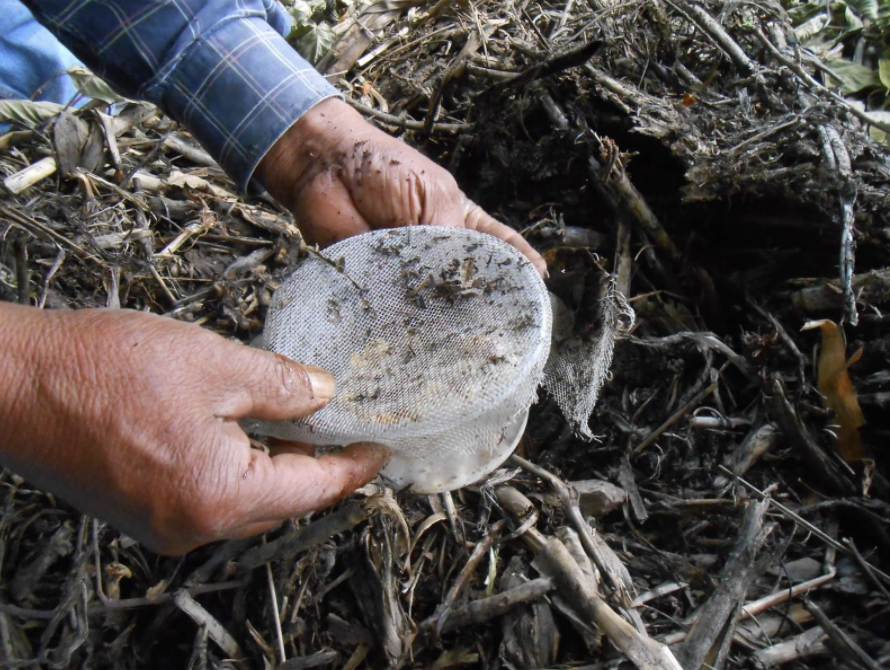
Fungi, bacteria and mycorrhizae, yeasts and other soil-benefitting organisms found on the mountains, in the forests and in agrochemical-free areas, are communally deployed. Producers use “fungi traps”to incorporate these organisms into biofertilizers.
At a pre-Hispanic archaeological site, Lucio meets a man applying for government funding for 26 tonnes of compost to grow maize. “I hope that once they see it is better, they will make compost for themselves, but for now they expect monetary support,” says Lucio.
Grupo’s “Flavor Trail” ecotourism project provides a community-led counterpoint to Big Agriculture. The 27 restaurants that comprise it serve locally-grown, mostly plant-based dishes — tortillas, gorditas, sopes and tostadas filled with cactus, chilli, and refried beans. This adds value to crops grown “the old way” — small-scale, by the Sierra’s inhabitants, and without chemical or pesticide run-off.
Handing in the compost funding application at the municipality, Lucio is told it will take several months until a decision on offering support to organic farmers is made. “They have other projects offering chemical fertilizers, so it is difficult to encourage farmers not to opt for that,” he says.
Despite rapid development following the US model, Mexico has seen renewed interest in regenerative agriculture practices as an antidote to environmental threats. But there is a long way to go, as not everybody is keen to return to “the old way,” working the land and risking losses from pests.
“They [regenerative farmers] act as if they are better than us,” said a Sierra Gorda farmer who asked to remain anonymous. “The agriculture they promote takes too long and is expensive. If I don’t have my ranch here, I wouldn’t be able to afford to buy my kids’ school things.”
Donancio, like many of the Sierra Gorda’s landowners, was offered rent by a meat company for his property in order to convert it into a large-scale ranch. Instead, in exchange for an annual payment for the environmental services that his estate offers to the community, he declined in favor of preserving the forest on his land.
Conserving the forest in this way eliminates activities such as livestock, extensive agriculture and logging, allowing nature itself to take charge of incremental self-regeneration, according to Pati. Donancio admits that had he not been paid to protect his property, like many of his neighbors he may have had to develop his forest area for livestock in order to make ends meet.
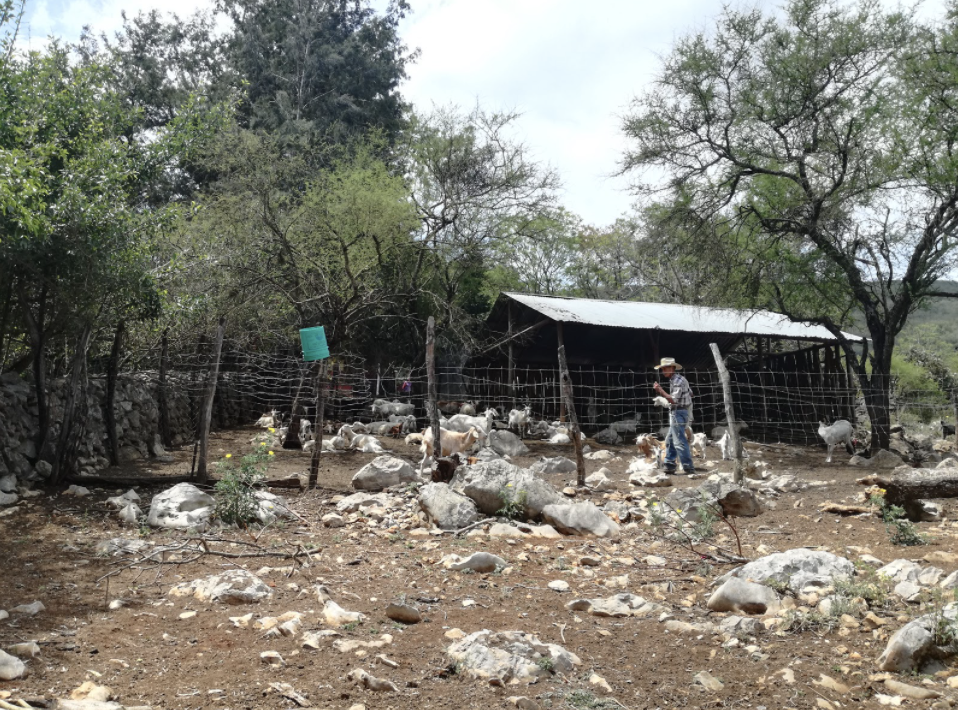
Efforts to remove livestock from forested areas can come up against opposition from ranchers. Where possible, they are encouraged to follow “holistic grazing” methods. However, rotational grazing does not tackle the issue of methane emissions and, with limited land area, not everybody can make a living sustainably “managing” livestock.
Regenerative agriculture alone cannot tackle forest fires, the changing climate, pests, industrial exploitation of the land, and what Pati calls “corrupt, ignorant officials” and “the deep inertia of producers,” but in the Sierra Gorda it can soften the blow. “Where ecosystems still have strength, like in this place and in other places, we have a window of opportunity where we can regenerate, re-green Mother Earth,” she says.
“There are fewer pest infestations now, with the lime sulfur, Bioles, algaes and Bordeaux mixtures that I put on the plants,” says Don Fausto Martínez, who has been growing avocados for six years. “You can see the change in the maize and beans too, in everything we grow. Before, the maize didn’t yield. Now, the soil produces on its own–it doesn’t ask for much.”