“The continent’s waters are in deep trouble,” said Dr. Mike Petersen, a respected independent environmental consultant based in Cape Town with more than a decade of experience. He believes mining the ocean is about to go mainstream.
“African politicians face a crucial decision. Will they heed to a global outcry from scientists and environmental groupings? Or will they water down key environmental regulations to give in to the so-called job creation and economic growth theory?” he asks.
Already, the writing is on the wall. A workshop was organized last May by the South African government, African Union, Norwegian government, and the UN’s International Seabed Authority (ISA) in Pretoria, South Africa, in an effort to pitch Africa into a worse environmental crisis.
The workshop left environmentalists feeling uneasy about the future. Many have begun challenging the current crop of African leaders to be a generation that changes the course of history—not one responsible for the continued consumption of the planet. Dr. Petersen is certain that, despite environmental concern, deep-sea mining will still be a reality by 2030 as coastal African countries are already taking measures to ensure they will benefit from this new boom.
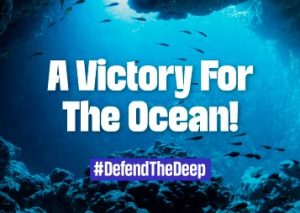
Scientists are issuing strong warnings against deep-sea mining, and are calling for precaution as the oceans are already being annihilated before our eyes. They say a growing body of scientific evidence points out that seabed mining will be extremely damaging and will put undiscovered wonders at risk.
“The environment is to be short-charged. African governments should pay the utmost attention. It’s a fact that deep-sea mining is set to tear its way across parts of Africa, and it’s set to generate controversy for its significant environmental and social impact.
“The earth’s final and largely unknown wilderness holds an ecosystem home to an array of life beyond our imagination. The latest science shows that our seas are in a dreadful ecological state. Seas are our planet’s most valuable resources, but few people in our political leadership and businesses realize how threatened they are. This is a recipe for disaster for the continent,’’ he adds.
African States make up 46 of the 168 Parties in the ISA, and 38 of those States are coastal States whose maritime areas cover approximately 13 million square kilometers. Despite Africa’s long-standing commitment to the ISA, the continent remains the only regional group that has not already moved to take part in deep-sea mineral exploration.